Friday, January 17, 2014
Last Class!
Today was our last class of the first semester. We had a test to finish off the year. The average score of all the tests was an 80. During class, after we all finished, Mr. Schick went down to the office to grade our tests and we got to see what we got. This class was a really fun class and I still have Mr. Schick next semester. I don't know what west civilization is going to be like but I don't think it will be much different from next semester. I had a good class this semester and I also have a good class next semester! I hope I'll be able to get a better grade in West Civ than what I got in Human Geo. I liked that we got to have a student teacher once and a while but I think we should have done more group work instead of just taking notes everyday. The google docs were a lot of fun too and helped doing projects and made it a lot easier! I was happy we did not have that much homework throughout the year and the blogs were an easy grade. I'm going to miss this year because it was a lot of fun but I also can't wait for West Civ!

Thursday, January 16, 2014
For the Test...
- animals need to be social to be domesticated
- zebras can't be domesticated because they are skiddish and nervous animals
- all of the 14 animals that can help us, none of them are from Papa Newguinea and Africa
- South America only has 1 of the domesticated animals, Lama
- all the others are from North Africa, Europe, Asia
- town of Gware- 9,000 years old
- people taught themselves how to make plaster
- settlements were abandoned in fertile crescent
- fertile crescent stretched laterally the same distance opposite directions so: vegetation, weather, and day time were all equal
- Drah has grainery
- Papa Newquinea- between Asia and Australia
- moved out of Mesopotamia: got dry
- domesticated plants: easy to grow/store/nutritiousness
- 14 domesticated animals
- domesticated animals: herbivore/over 100 lb/ has kids at young age/high archy/gets along with humans
Wednesday, January 15, 2014
Guns, Germs and Steel (continued)
- various places that are able to grow crops
- China: rice
- America: corn, beans, squash
- Africa: sorgum, yams
- Papa Newguinea: sago
- only allowed to live on the settlement if they became more productive
- animal waste can be used as fertilizer
- goats and sheep are the first domesticated animals
- if you want to have good domesticated animals you need to have animals that are able to give birth around the age of one or two
- Diamond counted 148 plant eating animals, over 100 pounds that are able to be domesticated:
- goats
- sheep
- pigs
- cows
- horse
- donkeys
- camels (2 kinds)
- water buffalo
- lama
- reindeer
- yaks
- mithans
- cattle
Tuesday, January 14, 2014
Guns, Germs and steel
Jared Diamond:
- has traveled around the world
- Papua New guinea
- is a bird watcher
- UCLS Las Angeles professor (biologist)
- cargo- possessions or stuff you own
- human Philosophy
- Newguineans thought power was determined by race
- all great civilizations have some things in common:
- advanced technology
- large population
- well organized work force
- sago tree- a lot of food in it
- not super nutritious
- have to eat it quickly
- takes awhile to harvest
- barley and wheat were food in the Middle East
- very plentiful
- Drah- very earliest village or early official settlement
- granary- a place to store food
- domestication- cross pollination, cross breed things
Sunday, January 12, 2014
Urban Geography (The Second Urban Revolution)
The Second Urban Revolution
- a large scale movement of people to cities to work in manufacturing. Made possible by:
During Second Half of 20th Century
- nature of manufacturing changed and locations changed too. Many factories have been abandoned, creating "rust belts" out of once-thriving industrial districts
- a large scale movement of people to cities to work in manufacturing. Made possible by:
- Second agricultural revolution that improved food production and created a larger surplus
- industrialization, which encouraged growth of cities near industrial resources
During Second Half of 20th Century
- nature of manufacturing changed and locations changed too. Many factories have been abandoned, creating "rust belts" out of once-thriving industrial districts
- houses and cities in Indus River were all the same size and all had access to the local sewer system
- central business district (CBD)
- central city (the CBD + order housing zones)
- suburb (outlying, functioning uniform zone outside central city)
Edge City:
- suburban downtowns often located near key freeway intersections often with:
- office complexes
- shopping centers
- hotels
- restaurants
- entertainment facilities
- sport complexes
Making cities in the Global Core
- redlining- financial institutions refusing to lend money in certain neighborhoods
- blockbusting- realtors purposefully sell a home at a low price to an African American and then solicit white residents to sell their homes at low prices to generate "white flight"
Thursday, January 9, 2014
Urban Geography (continued)
As soon as people started growing things (grain and vegetables) that is the background of agricultural villages
- food will already be there and it's less to hunt for
- build your home, live a better life (don't have to move a lot)
- not everyone has to worry about hunting
*have a surplus*
Two components enable the formation of cities:
- agricultural surplus
- social stratification (leadership class)
- Mesopotamia 3500 BCE (Iraq)
- Nile River Valley 3200 BCE (Egypt)
- Indus River Valley 2200 BCE (India)
- Huang He and Wei River Valleys 1500 BCE (China)
- Mesoamerica 200 BCE (Guatemala or Mexico)
- many ancient cities were theocratic centers
Diffusion of Urbanization
- the Greek cities
by 500 BCE, Greeks were highly organized
- network and more than 500 cities and towns
- on the mainland and islands
- each city had an acropolis and an agora
a system of cities and small towns linked together with hundreds of miles of roads and sea routs
- sites of roman cities were typically for trade
- a roman city's forum combined the acropolis and agora into one space
- roman cities had extreme wealth and extreme poverty (between 1/3 and 2/3 of empires population was enslaved)
Wednesday, January 8, 2014
Urban Geography
Urban Geography
*when and why did people start living in cities?*
- city: a conglomeration of people and buildings clustered together to serve as a center of politics, culture and economics
- the build up of a central city and the suburban realm
* 50% people live in urban areas*
- a rural area can become urbanized quite quickly in the modern world
The first Urban Revolution
Agricultural Villages:
- before urbanization, people often clustered in agricultural villages
- a relatively small egalitarian village where most of the population was involved
Sunday, December 15, 2013
Exam information
What to know:
- population pyramids
- three basic shapes:
- the christmas tree:
- growth rates are slow
- high birth rate
- short life expectancy
- Africa, Namibia, Bangladesh
- the box:
- low infant mortality
- high birth rate
- short life expectancy
- Sweden, USA
- the cup:
- low birth rate
- shrinking population
- long life expectancy
- Italy, Japan, Germany
- crude death rate- number of deaths per 1000 of the population
- crude birth rate- how many babies are born per year per 1000
- rate of natural increase- subtracting the death rate from the birth rate then
divide by 10
- net migration rate- difference between the number of emigrants
and immigrants
- immigrant-
someone coming into a country
- emigrant-
someone leaving a country
- total fertility rate- average number of children born per women
- if 2.1 the population will stay the same (replacement
rate)
- over 7 billion people on earth
- 90% of the population growth takes place in
developing countries: Africa, Southeast Asia, Latin America
- The world is expanding faster than we know it
- cultural geography
- world leaders
- examples:
language, religion, ethnic heritage
- political geography
o
look for people who have
a strong economic background
- language:
o
Brazil is the only South
American nation which does not speak Spanish. It speaks Portuguese
o
Canada is a bilingual nation: English and French
o
Switzerland has multiple
languages
o
English is the language
for business around the world
o
If you speak multiple languages
you can be culturally aware
·
Ethnic Heritage:
o
Yugoslavia has many
ethnic groups: Serbs, Croats, Boshains
o
US and Switzerland have merged
multiple ethnic groups in their country
o
Korea and Japan primarily have one
ethnic group
·
Religion
o
Can be both unifying and
disunifying
o
Five major religions
§
Hinduism
§
Buddhism
§
Judaism
§
Christianity
§
Islam
·
Jews are known as
decedents of Abraham
·
EU- European union
·
OPEC
·
NAFTO
·
NATO
·
Nationalism- the belief that your nation is superior to all
others
·
Economic differences:
o
Fertile land
o
Access to fresh water
o
Access to the coast
o
Fishing rights
o
Natural resources
o
Different economic
philosophies
- essay:
- write about what was learned about in these 5
sections
- what did you learn
- what does it mean
Socrates
- agora-
a place where people met
- arete-
excellence, taking pride
- polis-
name for Green city state
- year 508 BC-
when the Greeks over threw their government
- Socrates-
philosopher, ugly
- the socratic method- questioned everything, asked why a lot
- the death of Socrates- his tyrant was put to exile of was to drink
poison, he was a threat
- he was charged for- corrupting the youth of Athens disrespecting the
Gods
- his famous saying: the un-examined life is not worth living
Globalization:
- an interconnection of different parts of the world it
results in the expansion of international cultural economic and political
activities
- infrastructure-
our country has more money and more advantages and other countries want
what we have and if they has what we have they could participate in the
world economy but they can't
- pull force- something that makes you want to come to a country
o
religious freedom
o
job opportunities
o
good health services
o
political freedom
·
push forces- something that makes you want to leave a country
o
civil war
o
environmental
degradation
o
unemployment or
underemployment
o
religious/ ethnic
persecution
Letter to Garcia:
- written by President McKinley
- asked Roan to go find Garcia
- letter was written by Albert Gubberd
General Garcia
- general in Cuba
- during Sanish-american war
- hid in jungle
Nike:
- Jim Keady-
got fired from his job because he refused to wear Nike symbols/
apparel
- strong willed man
- co-director and founder of Educating for Justice
- Leslie Kretzu-
co-founder of Educating for Justice
- went with Jim to the village where people who worked
for Nike live
- went to Indonesia
- workers were paid $1.25 a day
- Nike headquarters- Jakarta Indonesia
Microfinance- general term to describe financial services to low- income
individuals or those who do not have access to typical banking services
Thursday, December 12, 2013
Preparing for Exams
What to know:
- population pyramids
- three basic shapes:
- the christmas tree:
- growth rates are slow
- high birth rate
- short life expectancy
- Africa, Namibia, Bangladesh
- the box:
- low infant mortality
- high birth rate
- short life expectancy
- Sweden, USA
- the cup:
- low birth rate
- shrinking population
- long life expectancy
- Italy, Japan, Germany
- crude death rate- number of deaths per 1000 of the population
- crude birth rate- how many babies are born per year per 1000
- rate of natural increase- subtracting the death rate from the birth rate then divide by 10
- net migration rate- difference between the number of emigrants and immigrants
- immigrant- someone coming into a country
- emigrant- someone leaving a country
- total fertility rate- average number if children born per women
- if 2.1 the population will stay the same
- over 7 billion people on earth
- 90% of the population growth takes place in developing countries: Africa, Southeast Asia, Latin America
- cultural geography
- world leaders
- essay:
- write about what I've learned about in these 5 sections

- agora- a place where people met
- arete- excellence, taking pride
- polis- name for Green city state
- year 508 BC- when the Greeks over threw their government
- Socrates- philosopher, ugly
- the socratic method- questioned everything, asked why a lot
- the death of Socrates- his tyrant was put to exile of was to drink poison, he was a threat
- he was charged for- corrupting the youth of Athens disrespecting the Gods
- his famous saying: the un-examined life is not worth living
- an interconnection of different parts of the world it results in the expansion of international cultural economic and political activities
- infrastructure- our country has more money and more advantages and other countries want what we have and if they has what we have they could participate in the world economy but they can't
- written by President McKinley
- asked Roan to go find Garcia
- letter was written by Albert Gubberd
- general in Cuba
- during Sanish-american war
- hid in jungle
- Jim Keady- got fired from his job because he refused to wear Nike symbols/ apparel
- strong willed man
- co-director and founder of Educating for Justice
- Leslie Kretzu- co-founder of Educating for Justice
- went with Jim to the village where people who worked for Nike live
- went to Indonesia
- workers were paid $1.25 a day
- Nike headquarters- Jakarta Indonesia
Wednesday, December 11, 2013
Reviewing Microfinance Quiz
We got our Microfinance test back and we decided to go over them. I did not do as well as I thought I would. I think that I could have done a lot better. Some of the answers were close but one or two of them were dumb mistakes that I knew, I just put the wrong answer. After we reviewed the test we talked a little about the exams. We asked Mr. Schick if we were going to get a review sheet for our exam but he said no. I wasn't too happy about that but that just means that I will need to study everything that I have written down in my note book or typed on my computer.That is why over the weekend I got all of my information together from all of my subjects and organized them so I will have everything I need to study. I have already started looking over some of my subjects but I still have a few note cards to make and a few things to organize. I need to make sure that I study all the material in my notes and on our tests we got back to be able to do well on my exam. Doing well on exams can bring your grade up but if you do poorly on them it can seriously affect your grade.
Friday, December 6, 2013
Microfinance Quiz
We had our test today on microfinance. I thought it was actually really easy! I think I did really good on it too. One or two of the questions I wasn't positive about the answer but most of them I was. We had to know some numbers also but I made sure to study them really well. In class Mr. Schick went down to the office and graded our tests and when he comes back we will be able to figure out what we got. I really hope that I get a good grade because I want to pull up all my grades. Mr. Schick just got back and he said our average was 90%. We had a shadow in our class and he got to take the test too. I really hope that I get a good grade so I can pull up my grade.
Thursday, December 5, 2013
Notes for Microfinance Quiz
microfinance- a form of financial services for entrepreneurs and a small businesses lacking access to banking or related services
microloan- a small loan given to people who may not have access to a typical banking service
microloan- a small loan given to people who may not have access to a typical banking service
- usually to start or expand small, self-sufficient businesses
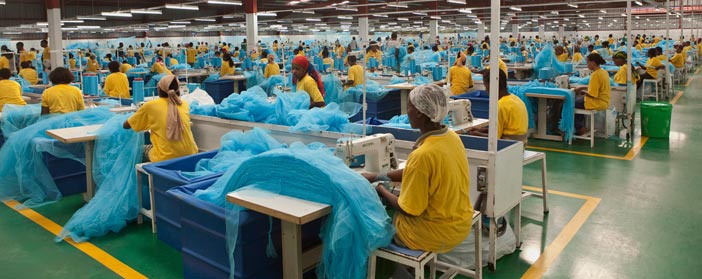
-they support research and development for a vaccine, diagnostics, and mosquito-control measures - like mosquito nets!
Who provides microloans?
Who recieves microloans?
Who provides microloans?
- As of November 26, 2013, Kiva has distributed $498,939,550 in loans from 1,015,823 lenders to 1,177,248 borrowers
- A total of 637,003 loans have been funded through Kiva
- The average loan size is $410.89
- The average Kiva user has made 10.06 loans
- Kiva's current repayment rate for all its partners is 99.01% !
Who recieves microloans?
- microentrepreneurs who are trying to start (or kickstart!) a small business
- villagers needing to fund a clinic, hospital, or other health care facility (malaria treatment, drugs, hypos, refrigerators, sanitation)
- teachers trying to run a school (buying anything from books and pencils to desks and chairs)
- students wanting to further their education (college tuition)
- high interest rates sometimes as high as 23%
- The cost of providing banking services to those living in poverty is high. Being the company that provides tiny loans can be expensive.
- What’s harder and more time-consuming to process: one $500,000 loan, or five hundred $1000 loans?
microloans are help
- banking services are often unavailable to poor people - microloans fill a gap
- it’s not just loans, but also insurance, legal representation, and help with financial planning that become available
- these are all important to people who are trying to break the cycle of poverty
- but poverty is a huge problem with no easy solutions
- there are many challenges faced by developing nations some of these can be alleviated through microloans
- substandard education ($ can help purchase supplies, buy books, pay teachers)
- poor health care ($ can help buy supplies, construct new/better buildings, deal with malaria)
malaria
- comes from the phrase "bad air"
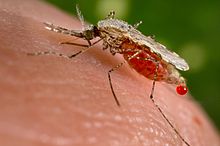
- It’s a mosquito-borne infectious disease
- humans and animals can be infected through the bite of a female mosquito
- no vaccine exists :(
- it kills around 665,000 people a year, many of them children in sub-Saharan Africa
- mosquito nets can be effective
- (Thank you, Bill Gates)
- Bill and Malinda Gates have the most amount of mosquito nets
Wednesday, December 4, 2013
Test Questions
Test Questions for Human Geo
Steven Kucther, Hailey Ishak, Ellie Gottschalk, Stephanie Imbierowicz, Carly Schofield.
1. who is microfinance used for ? - it is used for people to start up a business or to keep a business going or just to help people who need a small loan.
2. what is a common use for a micro loan? - starting up new businesses, products, clinics, machinery, furniture, and schools
3.What is a microloan? Loans people money to help them get a kick start in a small business that they think will be beneficial to their village or town
4.what is mocrofinance? A general term to describe financial services to low-income individuals or those who do not have access to typical banking services.
5. Who has the most supply of mosquitoes nets? Bill and Melinda Gates
6.what is the difference between developing countries and developed countries?- developing usually have lower levels of affluence and higher levels of unemployment, developed countries have the
7. what is malaria? - malaria is a wide spreading disease that is transmitted by getting from a mosquitos
8.why do poor people pay more for loans? -micro lenders don’t get paid as much so poor people have to pay higher loans
9. What is a microlender? An organization that makes business loans to individuals who arent able to obtain financing from traditional lenders.
10.In developing countries the majority of the population is? Poor
11. How is giving Microloans better than just regular donations to charity? This way you're not just giving them many for no reason but you're giving them a kick start to make a successful business and in the end it’s their responsibility to pay you back for your help.
12.give 3 problems in developing countries that can be solved by microloans: malaria, drought, clean water
Tuesday, December 3, 2013
Microfinance continued
microfinance- is a general term to describe financial services to low-income individuals or to those who do not have access to typical banking services.
microloan- loans people money to help them them get a kickstart in a small business that they think will be beneficial to their village or town.
microloan- loans people money to help them them get a kickstart in a small business that they think will be beneficial to their village or town.
- microloans help:
- investments in infrastructure
- education
- legal reforms
- what microfinance does:
- provides people who don’t have the money to get a loan to start a business
- It helps small businesses start up and stay running
- it is an opportunity for the people less fortunate to have something they may not be able to afford
- it allows people to build up their assets
- in developing countries the majority of the people are poor
- poor people are the least likely to be helped by regular banks
- problems microfinance can help:
- malaria
- drought
- clean water
- * Bill and Malinda Gates have the most supply of mosquito nets*
- loans help people..
- with small businesses to get a kick start on what they want to do
- they may get...
- funds
- structure investments
- housing
- help for the economy in small areas near by
- with more small businesses there won't be as many large corporations
- this means...:
- This means that wildlife areas in villages will be healthier because of reduced fumes from factories.
- This means that people will have a better quality of living. Areas that are consumed by large corporations have pollutants in the air and unhealthy living conditions
- Microlender- is an organization that makes business loans to individuals who are not able to obtain financing from traditional lenders. Microlenders typically charge higher-than-average interest rates; their maximum loan is usually $25,000 or less. Recipients of micro-loans are typically individuals in poverty or in development zones in the U.S., or who live in developing nations.
Sunday, November 24, 2013
Continuing the Game
On Friday when we all got to class, Mr. Schick wasn't here! We waited till after the announcements and he still did't show up! We found out that Mr. Torres was our teacher for the day. We were not sure why Mr. Schick wasn't in class but I think we will find out the next time we have class. Since Mr Torres was our teacher he was assigned to tell us that we had to continue playing the game we were playing the other day in class. We got to work in groups which I was happy about. I was also happy because when I looked on Mr. Schick's blog I found out that if we got a bad grade on our world leaders test we got to retake it! Over the weekend I checked all of my notes and made sure that I had all the information I needed so I can't get any questions wrong this time. I'm going to make sure that I read all of the questions more carefully this time also so I don't make any silly mistakes.
Thursday, November 21, 2013
The Emmy Award
Today was a lot more special than the other human geo classes I've had. I got to hold an emmy today! A man who has won several awards was here in our school today! It was really cool because Mr. Schick brought it in and we were allowed to take pictures of us with it on our phones. I got a picture with Hailey and I and also with Stephanie, Carly, Jazz, Sarah, Payton and Steven! I've never seen an emmy and it was so awesome to see one today and also hold it! After we finished taking pictures we played a game that was on Mr. Schick's blog that had to do with microfinance. I thought that was pretty cool too because we got to work in a group or with a partner. I never thought today I would get to hold and see an Emmy award! I thought it was really awesome and something I won't forget.
Wednesday, November 20, 2013
Open Notes Quiz Returned
We took a little break from learning about microfinance to go over our test on the world leaders that we got back. I did not do as well as I thought I did. I still passed which I am happy about but I didn't get a very high grade like I was expecting. Some of the questions I got confused on because when it asked for the country I put the leader. I think I should have read the questions more clearly. I had all of the information I needed but what also threw me off was the world map. I got one or two questions wrong because it was hard to tell which country on the map they were talking about. I was still really happy that I got more time to finish my test completely. That definitely helped with my grade because if I did not have extra time I would have gotten a really bad grade! I wasn't happy with the grade I got on this test but next time I will read the questions more clearly so I won't make the silly mistakes I made this time.
Tuesday, November 19, 2013
Microfinance
Microfinance- this is a term used to describe financial services to low income people or those who don't have access to a banking service. It is also the provision to financial services such as loans, insurance, savings and training to people who live in poverty.
Many people and communities are using microfinance successfully because it's a way to fight off poverty in rural areas. It puts savings, credit, insurance and other basic financial services within the reach of the people living in poverty. Through microfinance many institutions can have small loans, receive money from relatives that are working and safeguarding their savings. It is used for entrepreneurs and small businesses lacking access to related services or a bank. One of the places where microfinance is used is Southern Africa. It is used to supply financial services to the low- income employees. Mirofinance is a wide category of services which includes microcredit. Microcredit is a provision that is given to poor, low income clients.
Many people and communities are using microfinance successfully because it's a way to fight off poverty in rural areas. It puts savings, credit, insurance and other basic financial services within the reach of the people living in poverty. Through microfinance many institutions can have small loans, receive money from relatives that are working and safeguarding their savings. It is used for entrepreneurs and small businesses lacking access to related services or a bank. One of the places where microfinance is used is Southern Africa. It is used to supply financial services to the low- income employees. Mirofinance is a wide category of services which includes microcredit. Microcredit is a provision that is given to poor, low income clients.
Friday, November 15, 2013
Thursday's Test
We had the play on Thursday and that means our classes were a lot shorter! I liked having short classes but we had a test in Human Geo. I had all my notes prepared but since our class was short I couldn't finish. I was really upset I couldn't finish because if I had a little more time, I think I would have finished. Other people in my class didn't either and I wish we had more time. The questions I did finish I think I got correct! Hopefully I got a decent grade but I don't know if I will pass since I didn't have enough time to finish. The next time we have a short class I will get to class a lot faster so I will have more time to be able to finish.
Wednesday, November 13, 2013
Test Tomorrow!

THE WORLD LEADERS:
(Afghanistan) Hamid Karzai- opposed government
- Afghanistan is an Islamic republic
- He emerged as a resistance leader under Taliban rule and worked to undermine the regime.
- He is well versed in several languages, including his native Peshto, Persian, Hindi, French and English. (speaks 5 different languages)
- Several times in 2001, Karzai warned the United States that the Taliban were connected with al Qaeda and that there was a plot for an imminent attack on the United States, but his warnings went unheeded.
Dilma-opposed government
- Brazil is a federal republic
- She opposed Brazil’s military dictatorship of the 1960s and ‘70s, and served three years in prison, where she was repeatedly tortured.
- She has been divorced twice.
- She has a degree in economics, and now rules the country with the eighth-biggest economy in the world
- She underwent chemotherapy for lymphoma in 2009, and is now in remission.
- China is a communist state
- Xi Jinping is the son of revolutionary veteran Xi Zhongxun, one of the Communist Party's founding fathers.
- He married folk singer Peng Liyuan, who also holds the rank of army general, in 1987. To many in China, Ms. Peng was the better-known half of the couple before Xi Jinping became leader of the Communist Party.
- The couple have a daughter named Xi Mingze, who is studying at Harvard University in the US.
- France is a republic
- Hollande has no previous experience in a national government position.
- The mother of his four children is Ségolène Royal, with whom he shared a 30-year relationship.
- He was born in 1954 in the city of Rouen to an extreme-right physician father and progressive social worker mother.
- Germany is a federal republic
- Graduated from University of Leipzig in 1978 with a degree in physics and physical chemistry; earned a PhD in quantum chemistry from the German Academy of Sciences in Berlin in 1986
- Has been Chancellor since November 2005 (Angela Merkel)
- Merkel has earned the top spot on the FORBES list of Most Powerful Women In The World for eight of the past 10 years.
- India is a federal republic
- He taught Political Science at the Vidiyanagar College, and worked as a journalist before entering politics.
- Mukherjee was rated as one of the best finance ministers of the world in 1984 and was adjudged the best parliamentarian in 1997.
- He had a conflict with Rajiv Gandhi (who took over as Prime Minister from his mother Indira after she was assassinated in 1984) and started his own party – Rashtriya Samajwadi Congress.
- Iran is a theocratic republic-members of a religion are the rulers, and they use a holy book as a book of laws
- In 1963, took part in street protests against the U.S.-backed Shah of Iran. After the uprising was quashed, Khamenei was exiled. Khamenei was imprisoned multiple times and, in 1975, was internally exiled to a remote region in southeastern Iran.
- Was elected President of Iran in 1981 and re-elected in 1985. Became Iran’s Supreme Leader in 1989.
- Mr Rouhani has held several parliamentary posts, including deputy speaker and has also served on the Supreme National Security Council.
- Was just elected President of Iran - June 2013
- He has been openly critical of the outgoing president, saying Mahmoud Ahmadinejad's "careless, uncalculated and unstudied remarks" have cost the country dearly. (Ruhani)
- Israel is a parliamentary democracy
- Shimon Peres was born in Belarus. To escape the persecution of Jews there, the family fled to Palestine in 1934.
- When Arab forces launched their attack on the new state of Israel in 1948, Peres was given the chief responsibility for securing military equipment for Israel from abroad.
- Later he organized Israel's nuclear program and is regarded as the father of Israel's atomic bomb.
- As Israel's Minister of Foreign Affairs Shimon Peres was in charge of the Israeli negotiations during peace talks with the Palestinians. In the autumn of 1994 he shared the Nobel Peace Prize with his own Prime Minister Yitzhak Rabin and the Palestinian leader Yasser Arafat.
- As a child and youth he lived with his family in the US in the years 1956-58 and again in 1963-67
- After his brother Jonathan (Yonni) was killed, in July 1976, in the course of the Entebbe Operation, of which he was one of the commanders, Netanyahu returned to Israel and started to advocate international cooperation in fighting terrorism.
- Quote: "There are those who say that if the Holocaust had not occurred, the State of Israel would never have been established. But I say that if the State of Israel would have been established earlier, the Holocaust would not have occurred."
- Mexico is a federal republic
- managed to get elected in 2012 despite personal scandals involving extramarital affairs
- He was the eldest of four siblings in a middle-class family; his father, Gilberto Enrique Peña del Mazo, was an engineer for the electric company and his mother, María del Socorro Nieto, a schoolteacher.
- Reports that he fathered two children in extramarital affairs while his wife Monica raised the couple’s 3 children, plus the investigation into the sudden death of his wife at home in 2007, have prompted many to call him the Teflon candidate because trouble seems to slide off him.
- Two years later he announced his engagement to soap opera actor Angelica Rivera. Rivera became his wife in a star-studded wedding ceremony two years ago and is now the first lady of Mexico.
- Saudi Arabia is a kingdom
- He has fathered 22 children, the youngest when he was 79.
- He is worth approximately 21 billion dollars.
- He was appointed commander of the Saudi Arabian National Guard, a post he was still holding when he became king.
- In November 2007, King Abdullah visited Pope Benedict in the Apostolic Palace. He is the first
- Saudi monarch to visit the Pope. In March 2008, he called for a “brotherly and sincere dialogue between believers from all religions.”
- ruled by leader who is both a king and prime minister
- In 2011 he granted women the right to vote and run in future municipal elections, the biggest change in a decade for women in a puritanical kingdom that practices strict separation of the sexes, including banning women from driving (the only country in the world with such a ban).
(UK) Cameron and Queen Elizabeth
- The United Kingdom is a constitutional monarchy and Commonwealth realm
- At the age of seven, the young Cameron was packed off to Heatherdown, a highly exclusive preparatory school, which counted Princes Edward and Andrew among its pupils. Then, following in the family tradition, came Eton, Britain’s top private school.
- His first child, Ivan, who was born profoundly disabled and needed round the clock care, died in February 2009.
- The experience of caring for Ivan and witnessing at first hand the dedication of NHS hospital staff, is said by friends to have broadened Mr Cameron's horizons. He had, friends say, led an almost charmed life to that point.
- Cameron is the youngest Prime Minister (43 when he took office) in over 200 years.
- Elizabeth became queen on February 6, 1952, and was crowned on June 2, 1953. Her reign has lasted 60 years - and counting.
(Venezuela) Maduro
- Venezuela is a federal republic
- Nicolás Maduro Moros worked as a bus driver before becoming politically active in the early 1990s.
- Maduro was introduced to Hugo Chávez in 1992, after Chávez and other disenchanted members of the military were imprisoned for an attempted coup and Maduro began campaigning for Chávez's release. (Chávez was released in 1994 and won election to the presidency four years later.)
- After President Chávez won a third term in October 2012, he selected Maduro to serve as vice president. Maduro worked alongside the outspoken president, serving as one of his closest advisers as well as a loyal spokesman, until Chávez's death at 58 on March 5, 2013, from cancer.
hs
Subscribe to:
Posts (Atom)